Learning to write in a language that isn't yours
on eight-year-old magazines, lost diaries, and the long way back to the only thing that always made sense

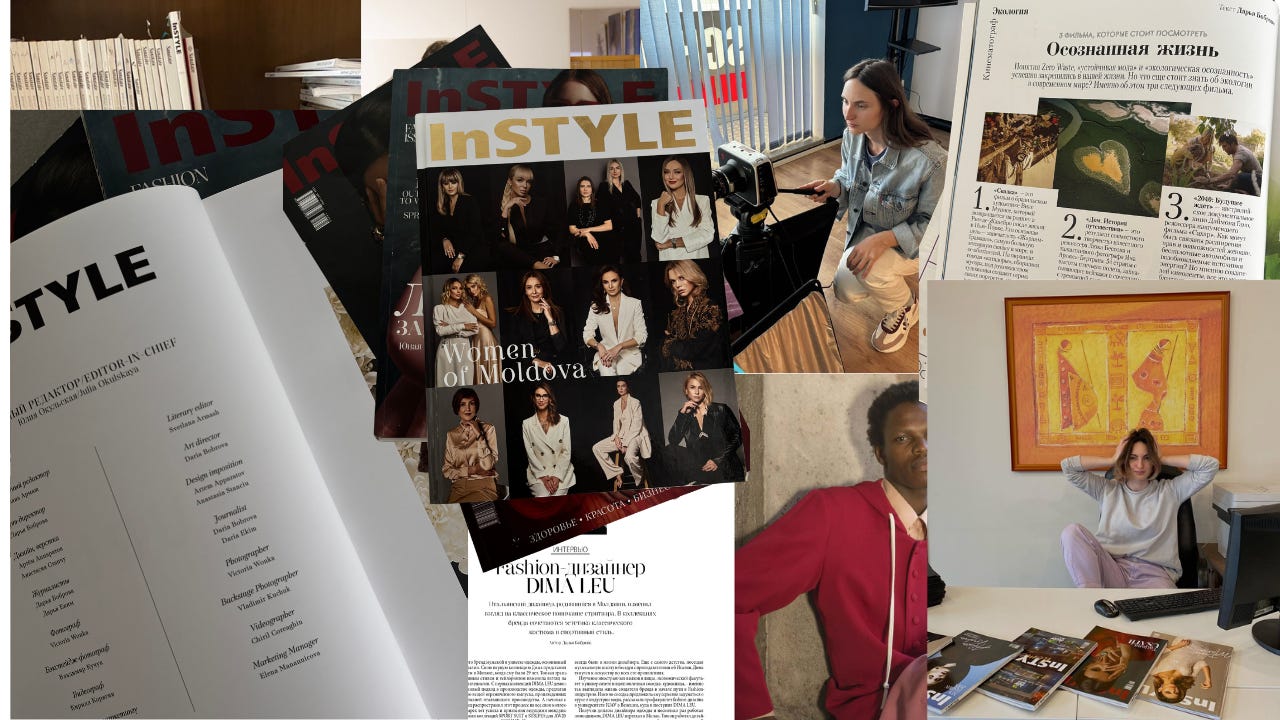
When I was eight, I made a magazine.
I called it “Smile” and wrote small articles about travel, observations, things I noticed around me (with the editorial standards of an eight-year-old). I don’t remember exactly what was in it. But I remember that it felt important. Like I was doing something that mattered, even if nobody asked me to.
Then came the teenage diaries. Pages and pages of everything: feelings, observations, a stream of thoughts I never filtered. I didn’t think of it as writing back then. It was just... what I did. It was quite natural.
I reread some of those diaries not long ago. I was surprised. The girl writing in them knew things I’d spent years trying to figure out.
Some of them are lost now. The earliest ones. I’m still a little sad about that.
the long detour
I’ve been writing, in one form or another, for most of my life. A fashion magazine in St. Petersburg while studying styling & fashion design. A column in a local print where I ran experiments on myself: waking up at 5am for a month, trying things, reporting back. Then InStyle Moldova, where I interviewed sixty women for a project I’m still proud of, wrote about culture and lifestyle, and had a team of my own for the first time.
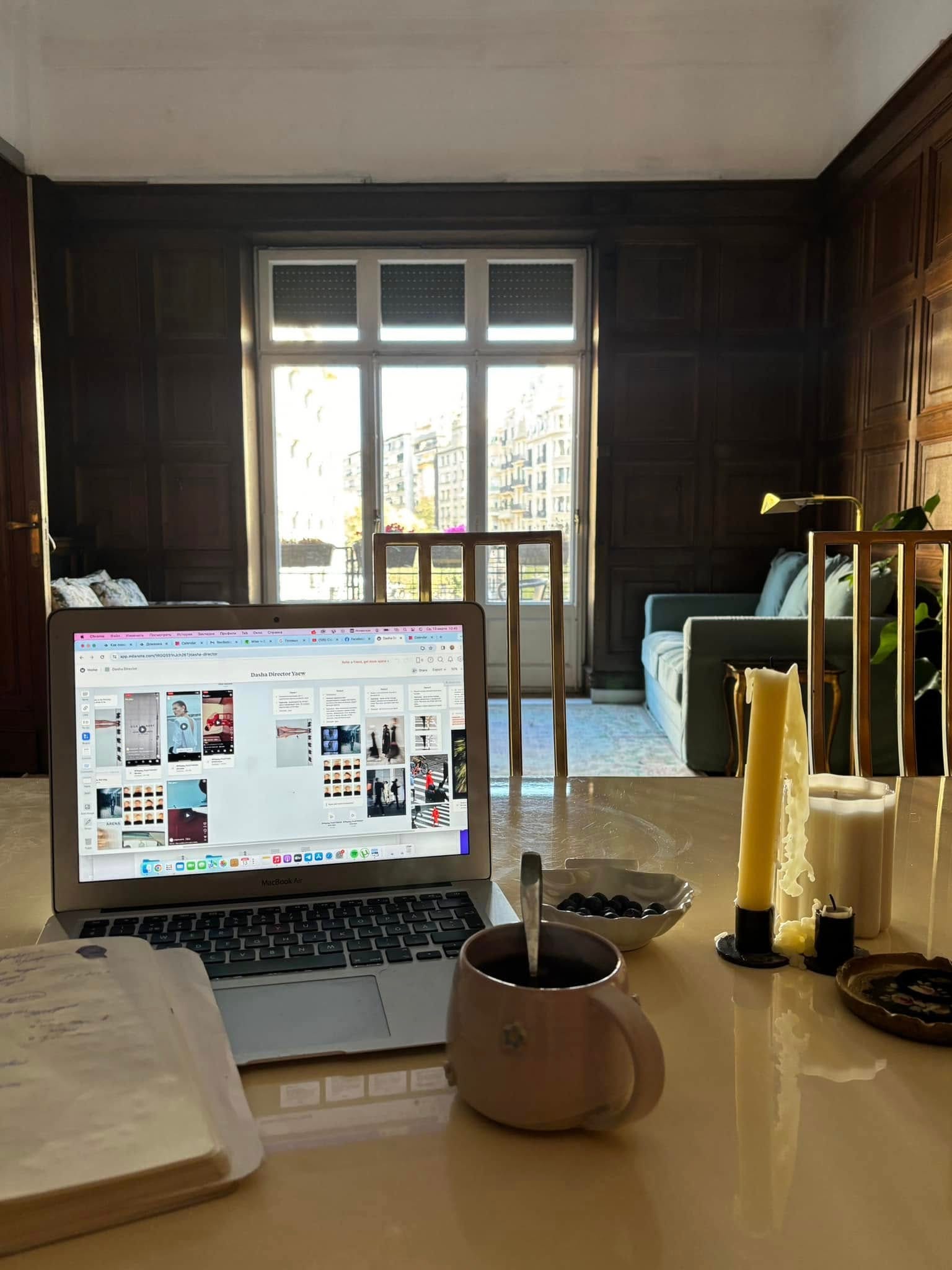
And then I moved to Spain.
And something stopped.
It sounds dramatic. It wasn’t one decision. It was more like a quiet closing of a door – the kind you don’t notice until you’re already on the other side. I’d always written in Russian. That was just the language of my thoughts, my voice, the version of me that knew how to put things into words. And suddenly I was living in a country where that language didn’t work, in the way that counted.
I wasn’t ready to write in Spanish. I wasn’t ready to write in English. So I just... didn’t write.
I went to film school instead. Which sounds like a non-sequitur but actually makes complete sense if you know me: I needed to express something, and since the language I trusted wasn’t available, I reached for another one. Visual language. I made a short film. I was proud of it.
But I still knew, somewhere, that it wasn’t quite the thing.
the moment in the kitchen
Last year I was at my parents’ house in Moldova, going through old things. I found some of the diaries. Read them for a while. And then I came across a question I’d apparently asked myself, more than once, across more than one notebook:
If you could only do one thing for the rest of your life, what would it be?
The answer, every time, in different handwriting from different years, was the same.
Write. Make things. The kind of work that doctors and authors do – something that matters to someone.
Nothing had changed. That was the strange part. After all the detours – the styling school, the film school, the marketing jobs, the languages I learned and the ones I avoided – the answer was exactly what it had always been.
I just hadn’t been brave enough to say it out loud.
a small story about a restaurant
Around that same time, I was at dinner with a friend. He’s a TV presenter and director – someone who has always known exactly what to call himself. At the end of the meal there was a guestbook, and he told me to sign it.
“Write that you’re a writer,” he said.
I hesitated. He didn’t. He wrote his own entry – from a director, TV presenter – and waited for me to write mine.
I don’t remember exactly what I put. Something vague, probably. But I remember that it was the first time someone had said that word to me out loud, as if it were simply true. You’re a writer. Write it down.
It took me another year to actually believe him.
on writing in a language that isn’t yours
My English is good now. Not perfect – there are words I reach for that aren’t there yet, constructions that feel borrowed. But good enough to say what I mean. Good enough to start.
What I’ve realised is that writing in another language isn’t just a technical challenge. It’s an identity question. Because the version of you that writes is a very specific version – the one with access to the right words, the right rhythm, the right way of hearing yourself think. Moving to a new language means building that version from scratch. It takes longer than learning vocabulary. It takes longer than passing a language exam.
It takes until you trust yourself enough to say something real.
I started this Substack a few days ago. I’m still figuring out what it wants to be. But I know that eight-year-old who made a magazine called Smile would recognise it. She’d probably have some notes.
I hope she’d be proud.